Business process is a low-level activity performed by an organization (usually action verbs)
examples: taking orders, invoicing, receiving payments, handling service calls, registering students, performing a medical procedure, or processing claims.
Retail Sales business process
POS retail sales transactions
Business process generates or captures key performance metrics
2. Declare the Grain
Declaring the grain means specifying what a fact table row represents.
“What does a single row in a fact table represent?”
Examples of grain declarations:
One row per scan of an individual product on a customer’s sales transaction
One row per line item on a bill from a doctor
One row per individual boarding pass scanned at an airport gate
One row per daily snapshot of the inventory levels for each item in a warehouse
Retail Sales grain
the most granular data is an individual product on a POS transaction, assuming the POS system rolls up all sales for a given product within a shopping cart into a single line item.”
3. Identify the Dimensions
Represents the “who, what when, where, why, and how” associated with the grain
Examples:
date
product
customer
employee
facility
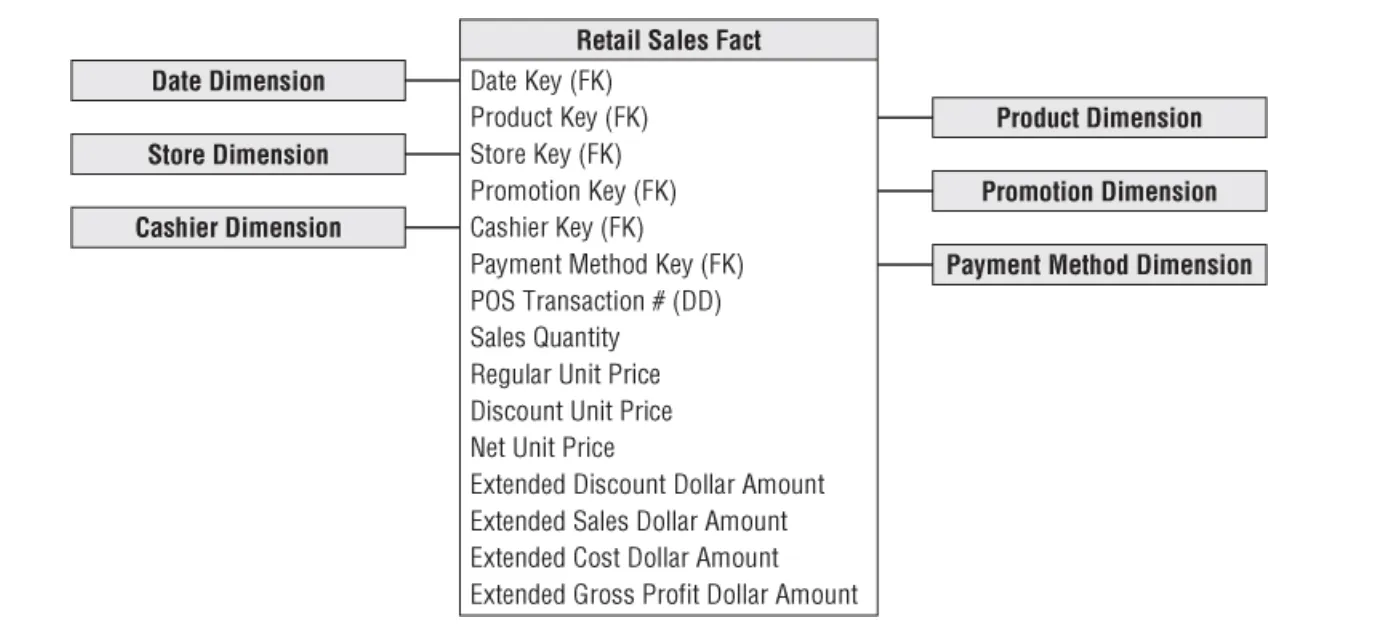
Retail Sales dimensions
immediate dimensions: product and transactions
descriptive dimensions: date, product, store, promotion, cashier, and method of payment.